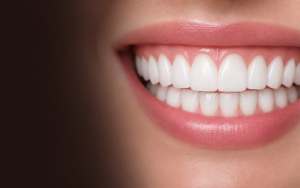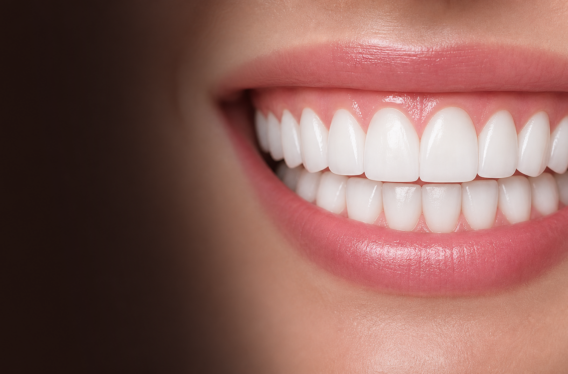
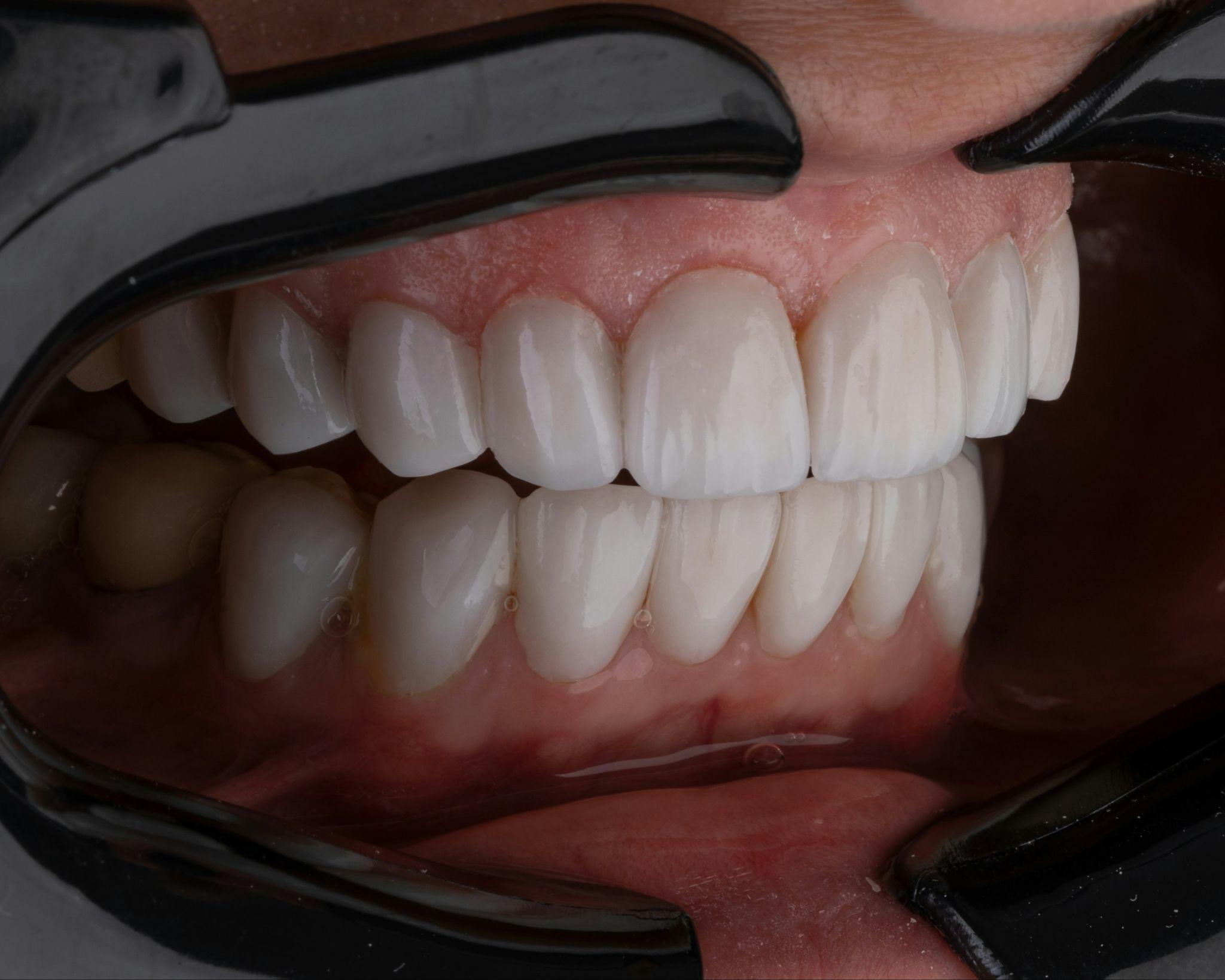
Dental veneers are thin, custom-made shells bonded to the front surface of your teeth to improve the appearance of your smile. They're one of the most common treatments in cosmetic dentistry, used to change the color, shape, size, or symmetry of the teeth often all at once.
Most patients choose veneers because they can achieve a significantly improved smile without braces or more invasive procedures. Depending on your needs, veneers can be made from porcelain, ceramic, or composite resin, and are designed to match your facial features and desired aesthetic.
Veneers can improve several different concerns at the same time. They are often used to create a brighter, more even and balanced smile without major dental procedures.
Many people get veneers to fix chipped, uneven, broken or worn teeth. They are also commonly used for teeth that are stained or discolored and do not respond well to whitening treatments.
Veneers can also help close small gaps between the teeth, improve minor unevenness, and make short or small teeth appear more proportionate. In some cases, they can create the appearance of a straighter smile without orthodontic treatment.
People commonly get veneers for:
There are three main types of veneers in general, composite, ceramic and porcelain veneers. While many people think ceramic and porcelain veneers are usually interchangeable, that is not strictly true. While porcelain is a type of ceramic, there are small differences between these two types of veneers.
Composite veneers are made from tooth-colored resin and shaped directly onto the teeth. They're more affordable and can usually be done in one visit, and are easier to repair if chipped. The downside is that composite is less durable and more prone to staining over time which is why many Korean dentists don’t recommend composite.
On the other side ceramic and porcelain veneers are custom-made in a dental lab and bonded to the teeth with strong adhesives. They're stronger, more stain-resistant, and look more natural. The material reflects light similarly to real enamel, giving that slightly translucent quality.
Most Korean dental clinics use e-max ceramic veneers for smile makeovers. E-max is a lithium disilicate ceramic known for being thin, strong, and naturally translucent like natural teeth which is ideal for front teeth. For patients with teeth grinding issues this type of strong material is highly recommended for added durability.
Ceramic and porcelain veneers generally last longer and hold their appearance better than composite over time.
The number of veneers you need depends on your smile, facial proportions, and overall aesthetic goals. Some patients choose 6 to 8 veneers for upper teeth, while others may get 12 or more including the lower teeth for a fuller smile makeover. Some patients only get veneers on the upper teeth, while others also choose lower veneers to create a more balanced smile and improve the overall harmony between the upper and lower teeth. In some cases, the patient’s bite and tooth alignment may also influence how many veneers are recommended.
In most cases, dentists recommend treating the teeth that are visible when you smile. The goal is to create a balanced, symmetrical, and natural-looking result rather than placing veneers on every tooth unnecessarily.
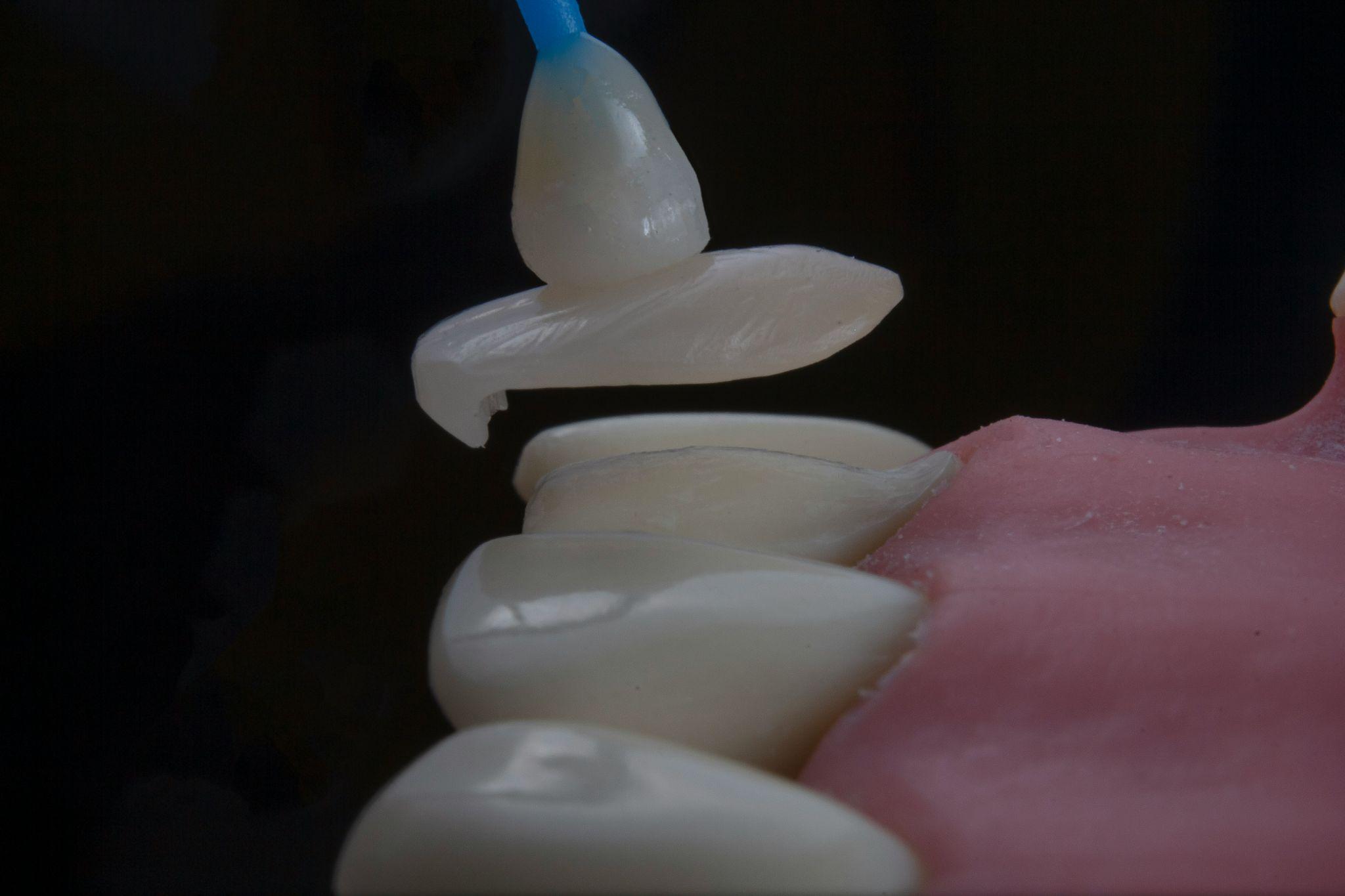
One of the most common questions patients ask before getting veneers is whether their teeth need to be shaved down. In reality, it depends on the condition of the teeth and the final result the patient wants.
For some cases, only a very small amount of enamel reduction is needed. This process is often called “prepping” or “polishing” the teeth. The goal is usually to create enough space for the veneers to fit naturally and comfortably without looking too thick or bulky.
Korean cosmetic dentists generally try to preserve as much natural tooth structure as possible, especially for patients looking for more natural-looking results. In many cases, the preparation is very minimal and may only involve light polishing of the enamel rather than aggressive shaving.
However, it is important to understand that veneer treatment is still considered a permanent procedure. Even if only a small amount of enamel is removed, the teeth usually cannot return to their exact natural state afterward. Because of this, patients should carefully consider their decision and have a proper consultation before starting treatment.
No-prep or minimal-prep veneers require little to no enamel removal before bonding but it works only for small percentage of the patients with a specific set of cases:
Also it is important to note that, even though no-prep veneers can be removed, it usually isn’t a quick or effortless process due to adhesives used on your enamel. This is why it’s important to understand that the decision may not be easily reversible if you want to go back to your natural teeth later on.
Due to the short stay of the foreign visitors, one-day veneer treatments are getting very popular in Korea these days. Same day procedures are available at some Korean dental clinics, especially clinics that use advanced digital scanning technology and in-house dental labs.
For many one-day veneer cases, patients usually visit the clinic in the morning, often around 10 AM for consultation, smile design, digital scans, and tooth preparation (aka. polishing or prep). The veneers are then custom-made the same day at the in-house lab and the final veneers are typically attached later in the afternoon or evening, usually around 5–6 PM.
This option is popular among international patients visiting Korea for cosmetic dentistry because it can significantly reduce treatment time and still have left time for sightseeing.
Veneers are considered a long-term cosmetic dental treatment. In most cases, porcelain or ceramic e-max veneers can last around 10–15 years or even longer with proper care, while composite veneers usually have a shorter lifespan and may require more maintenance over time. Most Korean dental clinics offer a warranty of 3–10 years on veneers, so if something does go wrong after you return home, you may be able to get it repaired or replaced through the clinic
Because veneer treatment often involves some level of tooth preparation or polishing, veneers are generally considered a permanent procedure. Even when the prep is very minimal, the teeth usually cannot fully return to their exact natural state afterward.
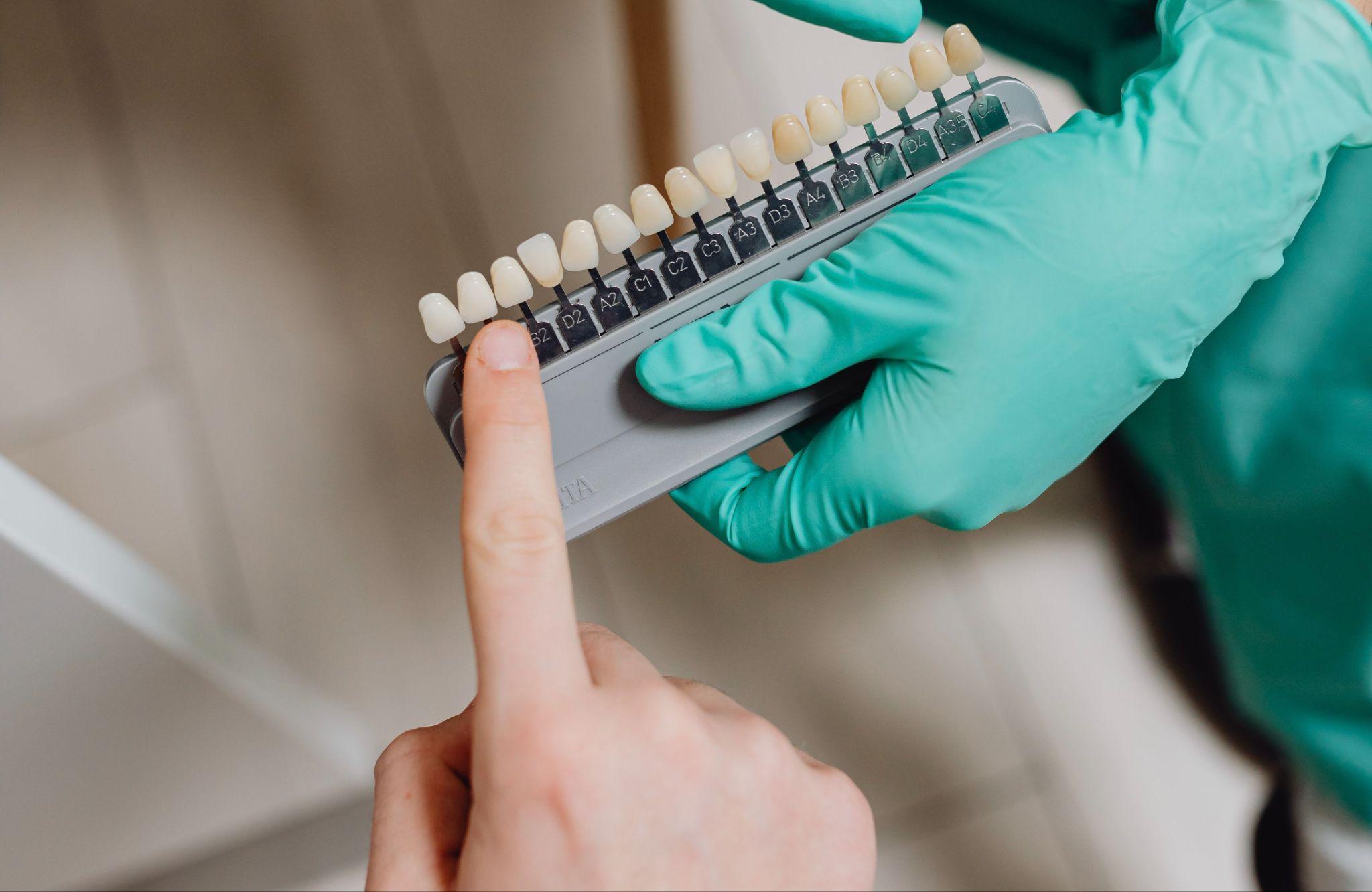
Veneer shades can be considered as two main categories: natural shades and “Hollywood” shades.
Natural shades follow the VITA Shade Guide, which most clinics use and the commonly chosen shades for veneers are A1 and B1 both noticeably white but still realistic-looking closer to the natural teeth color.
Meanwhile “Hollywood” bleach shades (BL1–BL4) go beyond the natural range entirely. These are the high-contrast Hollywood whites dramatic and more visibly cosmetic.
To choose the best shade for your veneer treatment, dentists advise that skin tone is the most reliable guide. Cooler complexions (pink or rosy undertones) tend to suit brighter shades like B1. Warmer complexions (golden or olive undertones) often look better with A1 or A2. Most Korean clinics offer a digital mock-up or physical shade sample before you commit, so you can see how it looks on your actual smile before making a decision.
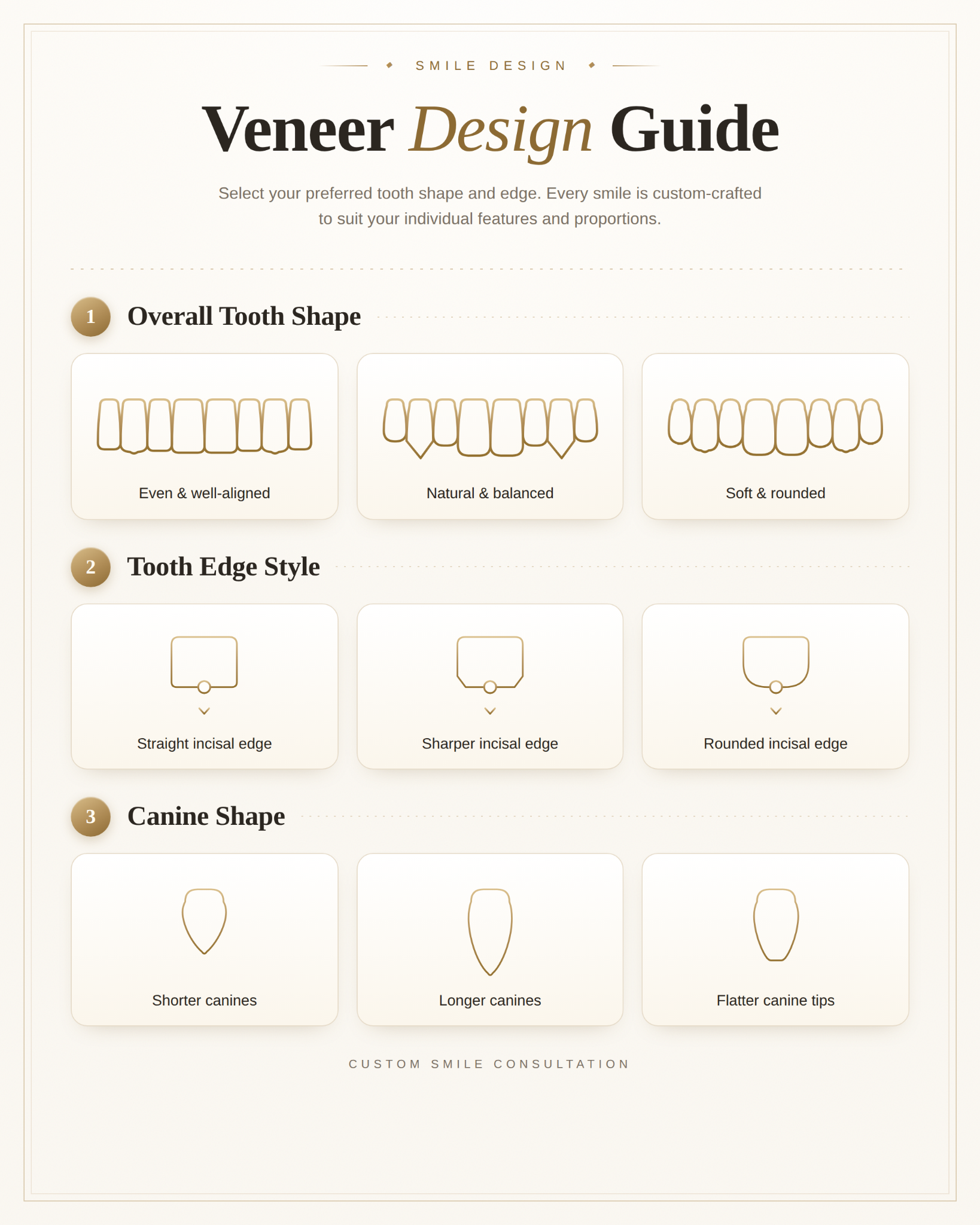
One of the main parts of getting veneers is having real input into how your final smile will look. Before any prep begins, the dentist will walk you through a series of design choices and each decision shapes how natural or transformed the result will feel like. Here's what those choices, veneer design actually mean.
The first step is the broadest choice which is choosing the general silhouette of your new smile.
Overall tooth shapes can be “even and well-aligned smile”, “natural and well balanced”, “soft and rounded”.
After choosing the overall tooth shape the next step is usually deciding the style of the tooth edges. The incisal edge is the very tip of each tooth, the part that shows most when you talk and laugh. Small changes here have an outsized effect on how the smile reads overall, shifting it from youthful and energetic to refined and mature.
The next step comes to choosing the canine types. The canines, the slightly pointed teeth on either side of your front four, affect how the smile frames the face and the personality it projects more than most people expect.
This is one of the most common concerns for international patients and it's a fair one to think through before committing. While ceramic and porcelain veneers are strong and durable, they aren't unbreakable. Like natural teeth, they can chip or crack from a strong impact, an accident, or excessive pressure from grinding.
The good news is that serious problems are relatively uncommon when veneers are well-made and properly cared for. Minor chips can usually be repaired by a local dentist in your home country. If the damage is more significant, the veneer may need to be replaced but this is rare under normal conditions.
As mentioned before, most Korean dental clinics also offer warranties on veneers, so if something does go wrong after you return home, you may be able to get it repaired or replaced through the original clinic.
One of the most common reasons international patients choose Korea for veneers is the combination of high quality and competitive pricing especially compared to the USA or Europe.
Veneer costs in Korea typically range from around ₩500,000 to ₩1,500,000 per tooth, which translates to roughly $350–$1,000 USD per tooth for ceramic and e-max porcelain veneers.
Pricing varies based on the material type, warranty, treatment time (same day treatment or regular timeline),
Pricing usually includes consultation, digital scanning and prepping without any hidden costs. Even some clinics also offer a free redo before final bonding if the preliminary result doesn't meet the patient’s expectations.
1. Veneers are a permanent procedure. When teeth are prepped, a thin layer of enamel is removed that does not grow back. The teeth will always need to be covered going forward. This is a long-term commitment, not something that can be reversed.
2. If gum contouring was part of your treatment, timing matters. The final veneer bonding must take place within approximately two weeks of the gum work. If too much time passes, the gum line can shift and affect the fit and appearance of the finished veneers. Make sure your follow-up appointment is scheduled within that window.
3. The adhesive sets fully in 3 days. The bond between your veneers and teeth takes about 3 days to cure. During this time, eat soft foods only. Avoid sticky, very cold, or very hot foods, as well as alcohol and anything with strong coloring such as coffee, red wine, or soy sauce.
4. Be careful with hard foods and your front teeth. Veneers have a strength similar to natural teeth but can fracture under concentrated force. Do not bite directly into hard foods with your front teeth, instead cut them into smaller pieces first. Avoid biting your nails or using your teeth to open packaging, as these habits place repeated stress on the veneers and shorten their lifespan.
5. Teeth grinding needs to be addressed. If you grind your teeth at night, discuss this with your dentist before or during treatment. Grinding places significant pressure on veneers and can cause cracking or chipping over time. A custom night guard is the standard solution.
6. Some sensitivity after the procedure is normal. Mild discomfort or a feeling of strangeness is expected and should gradually subside. The adjustment period can range from a few days to several months depending on the individual. If symptoms worsen rather than improve, return to the clinic.
7. Maintain good oral hygiene. Veneers themselves do not decay, but the teeth underneath them can. Brush consistently and use a water flosser to clean effectively around the edges of each veneer. Avoid strongly colored foods and beverages to maintain the appearance of your veneers long-term.
Is anesthesia used during veneer treatment?
Local anesthesia is typically used during the preparation (polishing/prep) stage to keep you comfortable. It's a light injection similar to what you'd receive for a standard filling
Any bruising due to anesthesia injection?
After the anesthesia injection visible bruising is uncommon but some patients experience minor gum sensitivity after prep, but
Who cannot get the veneers?
Veneers are not the right solution for every case. Patients with severe crowding, bite problems, or gum disease may need other dental treatments before considering veneers.
Non prep veneers candidates