Facelift in Korea: All You Need to Know When Planning Your Surgery
201
Related Clinics
2 hour
Procedure Time
2 weeks
Recovery Period
8,000
Cost Range
What is a facelift surgery?
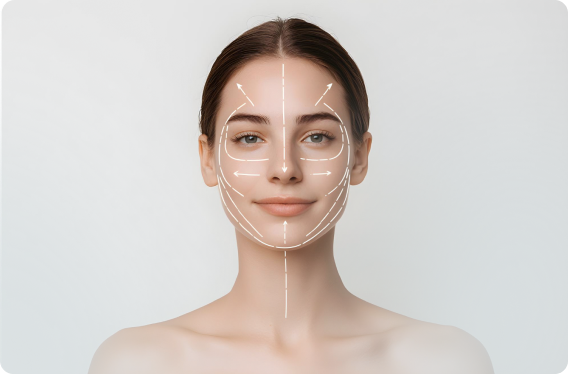
A facelift is a surgical procedure that repositions, removes, and tightens loose skin on the face and neck to reduce signs of aging and restore a more youthful appearance. Today, plastic surgery, especially facelifts, has evolved from taboo to trend, a worldwide phenomenon empowering individuals to look as young as they feel. With a wide popularity of facial rejuvenation surgeries within the country and numerous cases, Korea is one of the most popular destinations for facelift procedures for international patients.
For facelift procedures, it is often divided into areas depending on the target area that needs an improvement in skin laxity.
01
Mini facelift
A mini facelift is the least invasive facelift technique, suitable for patients in their 30s and 40s with early signs of aging who desire modest rejuvenation. Incisions typically measure 3-5cm and are concealed within the hairline, with minimal undermining of tissue planes. The procedure primarily addresses laxity in the lower cheek and prejowl regions. Due to minimal dissection areas, mini facelift’s recovery is shortest compared to other types of surgeries - expected 1-2 months.
02
Mid facelift
A mid-facelift, also known as a cheek lift, is what most patients envision when seeking a "facelift" procedure. The midface is one of the most prominent areas affected by aging, making the mid-facelift a cornerstone of facial rejuvenation surgery. Nasolabial folds, the most common concern among facelift patients, are effectively addressed through this technique. Incisions typically follow the contour of the ear and extend into the temporal hairline and/or behind the ear, depending on the extent of dissection and target areas.
03
Necklift
A neck lift targets loose tissues in the neck, addressing concerns such as submental fullness (double chin) and platysmal banding (turkey neck). With aging, soft tissues and skin descend and accumulate in the lower face and neck region, creating a heavy, aged appearance. Most patients over 50 combine a neck lift with a facelift, as these areas are anatomically and aesthetically interconnected. The platysma muscle is typically repositioned and tightened through neck plication or corset platysmaplasty during the procedure.
04
Forehead lift
A forehead lift (brow lift) is often performed for patients with a heavy, drooping upper face. This procedure elevates the forehead, brow, and upper eyelid region, creating a softer, more refreshed appearance. Multiple surgical techniques are available, including endoscopic approaches with endotine fixation devices. A forehead lift can be combined with forehead reduction surgery when indicated.
05
Temporal lift
A temporal lift (temple lift) addresses aging in the lateral brow and temple region. Incisions, typically 3-4cm in length, are placed within the temporal hairline. Tissues are lifted in a superior and lateral vector to elevate the outer brow and smooth temple hollowing. Many patients seek this procedure to achieve the popular "cat eye" or "foxy eye" aesthetic - characterized by an uplifted, almond-shaped eye contour.
Types of Facelift - By Method
01
SMAS Facelift
The SMAS (Superficial Musculoaponeurotic System) facelift is one of the most commonly performed facelift techniques. This method involves lifting and tightening the SMAS layer, which is the fibrous tissue beneath the skin that connects facial muscles. By repositioning this deeper structural layer along with the overlying skin, the SMAS facelift provides natural-looking, long-lasting results with improved facial contours and reduced sagging in the midface, jowls, and neck area.
02
Deep Plane Facelift
The deep plane facelift is an advanced technique that addresses deeper facial structures for more comprehensive rejuvenation. Unlike the SMAS facelift, this method releases and repositions the entire SMAS layer as a composite unit with the overlying skin, working beneath the plane that contains facial nerves. This approach provides more dramatic improvements in severe sagging, delivers highly natural results by repositioning facial fat pads, and offers longer-lasting outcomes, making it ideal for patients with significant age-related changes.
03
Endoscopic Facelift
The endoscopic facelift is a minimally invasive technique that uses small incisions and an endoscope (a thin tube with a camera) to perform the procedure. This method is particularly effective for addressing the upper and midface regions, including the forehead and brow area. The endoscopic approach results in minimal scarring, shorter recovery time, and less tissue trauma compared to traditional facelifts, making it an excellent option for younger patients with early signs of aging or those seeking subtle rejuvenation.
04
Ponytail Lift
The ponytail lift, also known as the minimal access cranial suspension (MACS) lift using an endoscope, is a less invasive facelift technique with shorter incisions hidden near the hairline. This method lifts and suspends sagging facial tissues vertically, mimicking the effect of pulling hair back into a ponytail. The ponytail lift offers a quicker recovery time, less visible scarring, and natural-looking results, making it popular among patients seeking facial rejuvenation with minimal downtime and a refreshed, lifted appearance.
05
Endotine Facelift
The Endotine facelift utilizes bioabsorbable implant devices made of polylactic acid to secure and elevate facial tissues during the lifting procedure. These small, rigid fixation devices have tiny tines that grip tissue and hold it in the desired position as healing occurs. The Endotine device gradually dissolves over several months as the tissue heals in its new position. This technique provides strong, reliable tissue fixation, reduces tension on incision lines, and can be used in various facial areas including the brow, midface, and neck for effective, long-lasting rejuvenation.
Ideal Candidates for Facelift Surgery
Facelift surgery is ideal for patients with the following indications
Loose and sagging skin on the face and neck area
Prominent nasolabial folds
Preserved skin elasticity
Jowl formation
Age between 40-60 years
Horizontal forehead wrinkles (addressed through forehead lift)
Turkey neck and double chin (addressed through necklift)
What is a good age to have a facelift surgery?
Facelifts are most commonly performed on patients in their 40s to 60s. Occasionally, patients in their 20s and 30s undergo this procedure following significant weight loss or facial contouring surgeries. Facelifts yield the best results when the skin still has sufficient elasticity to maintain tissue structure. Patients in their 70s also commonly have the surgery when they are in excellent health.
Why have facelift in Korea?
Many international patients worldwide visit Korea for facelift procedures. Korea is one of the most robust destinations for cosmetic surgery, with facial rejuvenation among its most popular trends. The country offers cutting-edge technology, top-tier surgeons, high case volumes, and efficient systems that create a smooth, streamlined experience for out-of-country patients. Korean surgeons deliver exceptional skill while maintaining affordable and competitive surgical fees. With a high volume of international patients seeking surgery in Korea, surgeons have extensive experience working with patients of diverse ethnicities. Through KORA, communication and preparation become even more seamless.
How to Find a Suitable Facelift Surgeon for You
When searching for a facelift surgeon, the most important factor to verify is the doctor's credentials. Decisions are sometimes misled by commercialized marketing of premium facilities, overpromised results, and discounted deals. It is crucial to understand who the performing surgeon is. See KORA's checklist on how to find the best facelift surgeon suitable for your surgery
Is the performing doctor a board-certified plastic surgeon?
What is the education and training background of this surgeon?
Which surgeon performed the before-and-after cases?
Does this surgeon provide consistent results?
Are the before-and-after photos altered or photoshopped?
Where are the incisions made and how do the scars look after full recovery?
Does the operating room have safety systems in place for emergencies?
What type of aftercare is provided?
How Much Does a Facelift Cost?
Cost Range
$8,000 ~ $10,000
Facelift costs vary significantly depending on the performing surgeon and the surgical method employed. In Korea, a mid-facelift typically ranges from $8,000 to $10,000 USD on average. The cost may be lower if the surgical area is smaller / simpler, or higher if a more advanced technique is used or if the procedure is performed by a senior surgeon
It is important to consider which facial areas you would like to address (such as the forehead, temporal region, or neck) and whether you plan to combine the facelift with related procedures (such as blepharoplasty or fat grafting). Most commonly, comprehensive full facial rejuvenation can range from $20,000 to $40,000 USD, depending on the final surgery list and the performing surgeon.
Surgery Preparation: How to Prepare for Your Facelift Surgery Trip
For out-of-town and international patients, most facelift procedures require 10-12 days of initial post-operative care. During this period, doctor's follow-ups, dressing changes, injections, drainage removal, and stitch removal are performed. Maintaining optimal medical health is one of the most important aspects of surgery preparation.
Most clinics will conduct blood and urine tests, along with an EKG and chest X-ray, to ensure you are in good health for the surgery. It is essential to maintain blood pressure and glucose levels within normal ranges. Reviewing all medications and supplements to determine whether to continue or discontinue them is a crucial part of surgery preparation. Smoking is strictly prohibited before and after the surgery to ensure proper recovery as well.
Recovery Period: What to Expect After the Surgery
Procedure Time
2hours
Recovery Period
2weeks
The initial recovery after a facelift typically occurs during your stay in Korea, which is approximately 2 weeks. Pain management is generally well controlled with modern medicine, though you should expect to feel tightness and discomfort. Bandages and drainage tubes are required in most cases.
Within the 2-week period, major swelling and bruising will subside, and you can resume normal activities afterward. Smoking, drinking, and exercise are restricted for several weeks following the surgery. Final results typically take 3-6 months to fully develop, depending on the type of facelift performed.